Pest Control Saint-Léonard
Pest control Saint-Léonard H1P H1R H1S Montreal
Trusted Pest Control in Saint-Léonard , Expert Mice, Rat & Ant Exterminator for Duplexes and Commercial Properties.”
- mice exterminator Saint-Léonard Montreal
- rat control H1R Saint-Léonard QC
- exterminator near me Saint-Léonard QC
- commercial exterminator Saint-Léonard H1S
- Ant colony treatment Montreal
4.9 Stars | Google Reviews | Thousands of Happy Clients
- Experienced VMR H3P Residential Pest Removal

Pest Control Saint-Léonard: Trusted Exterminator for Duplexes and Commercial Properties
Saint-Léonard is one of those east Montreal neighbourhoods that operates at two speeds at once — quiet residential streets full of well-maintained duplexes and front gardens, running parallel to busy commercial strips along Jarry, Lacordaire, and Viau. That dual character is exactly what makes pest control in Saint-Léonard a year-round concern across both contexts. Mice and rats in the residential blocks, ants working through duplex foundations in spring, rodents cycling in from adjacent commercial and industrial areas as temperatures drop — it’s a consistent pattern across H1P, H1R, and H1S, and one My Pest Exterminator has spent years working around. Whether the problem is in a ground-floor duplex unit, a commercial kitchen off Jarry, or a warehouse on the H1S periphery, we understand what drives pest activity in this part of the city and how to address it at the source.
What Makes Saint-Léonard’s Pest Environment Distinct
Saint-Léonard sits in a busy stretch of the east island, bordered by Anjou, Saint-Michel, Montréal-Nord, and Rivière-des-Prairies–Pointe-aux-Trembles. That position in the middle of a densely populated corridor means rodent pressure arrives from multiple directions rather than from a single environmental source like a river or industrial park. Commercial activity along the main arteries generates consistent food waste. The duplex and multi-unit housing stock concentrates pest spread through shared building structures. And the proximity to busier commercial zones to the south and east means rodents — particularly rats — have well-established movement corridors running directly through residential blocks.
Saint-Léonard sees three primary pests: mice and rats throughout the fall and winter, and ants consistently through spring and summer. The seasonal transition between those categories is predictable enough that proactive management across both makes more practical sense than addressing each one reactively after it’s already visible inside the home or building.
Mice Control in Saint-Léonard's Duplexes
Duplexes are among the most pest-accessible residential building types in Montreal. A duplex sits at grade, has two units sharing walls and floor structures, typically has an attached or detached garage and a garden, and was often built with construction standards that didn’t account for rodent exclusion as a design consideration. Foundation settling over decades, original window frames that have shifted, gaps around utility penetrations, and basement utility rooms shared between units all create entry and movement paths that mice use efficiently.
In H1P and H1R especially, the duplex concentration is high enough that a mouse problem in one unit frequently has its entry point in the shared basement or utility space — which means treating only the upper unit while the lower unit shares the same foundation gap resolves nothing permanently. We inspect the full building structure before recommending any treatment, because in a duplex, the unit making the call is rarely where the problem actually starts.
If you’re hearing activity in the walls or ceiling at night, finding droppings near a kitchen baseboard or in a storage closet, or noticing a gap in the building’s foundation that wasn’t there last year — that’s the point to call a mice exterminator. Every week matters in a duplex, because what starts in one unit can be in both within a few weeks if the entry and movement paths aren’t closed off.
Mice and Pest Control for Landlords in H1P, H1R, H1S
Property owners managing duplexes or multi-unit residences in Saint-Léonard face the same Quebec tenant law obligations as landlords anywhere in the province — pest-free housing is a landlord responsibility, and failing to act on a complaint promptly creates legal exposure. We work with property owners throughout H1P, H1R, and H1S on both immediate response to tenant complaints and preventive inspections before the fall mouse season begins. Written documentation of every visit and treatment applied is provided as standard for landlords managing multiple units.
Rat Control in Saint-Léonard’s Commercial and Residential Areas
Rats show up in Saint-Léonard differently than mice do. Where mice tend to enter residential buildings through small structural gaps, rats are more likely to establish outdoors first — burrowing under patio slabs and concrete steps, along the back-lane fence lines, beneath garden sheds and storage structures, and near outdoor waste bins in the commercial zones along the main strips.
The commercial density along Jarry Est and Viau creates exactly the kind of reliable outdoor food source that sustains rat colonies through the summer and into fall. Restaurant waste, commercial dumpsters without proper seals, and high-turnover food retail all generate the organic material rats need to establish and grow a colony. By October, those colonies — expanded through the warm months on reliable outdoor food — begin pushing into adjacent residential properties as temperatures drop and outdoor conditions become less hospitable.
Signs to watch for: burrow holes near the foundation or under concrete steps, grease marks along exterior walls close to the ground, disturbed soil in garden beds or under the deck, droppings near outdoor waste storage, or gnaw damage around the lower edges of a wooden fence or shed door. Rats found inside a building during the day are almost always a sign of a large, established outdoor colony — indoor activity is typically the overflow.
We approach rat control in Saint-Léonard with the outdoor environment as the starting point. A perimeter inspection of the exterior — not just the inside of the building — is where we identify what’s actually driving the problem before treatment begins. For commercial properties on the main strips, we build programs around the operational schedule of the business, use tamper-resistant exterior bait stations appropriate for food-adjacent environments, and provide the documentation that food service operations need for compliance purposes.

Ant Extermination in Saint-Léonard Homes and Commercial Properties
Ants are a spring and summer constant in this neighbourhood, and the duplex housing stock along with the well-used commercial strips creates ideal conditions for several ant species to establish in. Pavement ants nesting in soil along foundation walls and beneath patio or driveway concrete are the most common residential complaint. They push inside through foundation cracks, utility penetrations, and gaps around door frames on the garden-level units of duplexes — the trail in the kitchen is typically the visible end of a colony established directly outside.
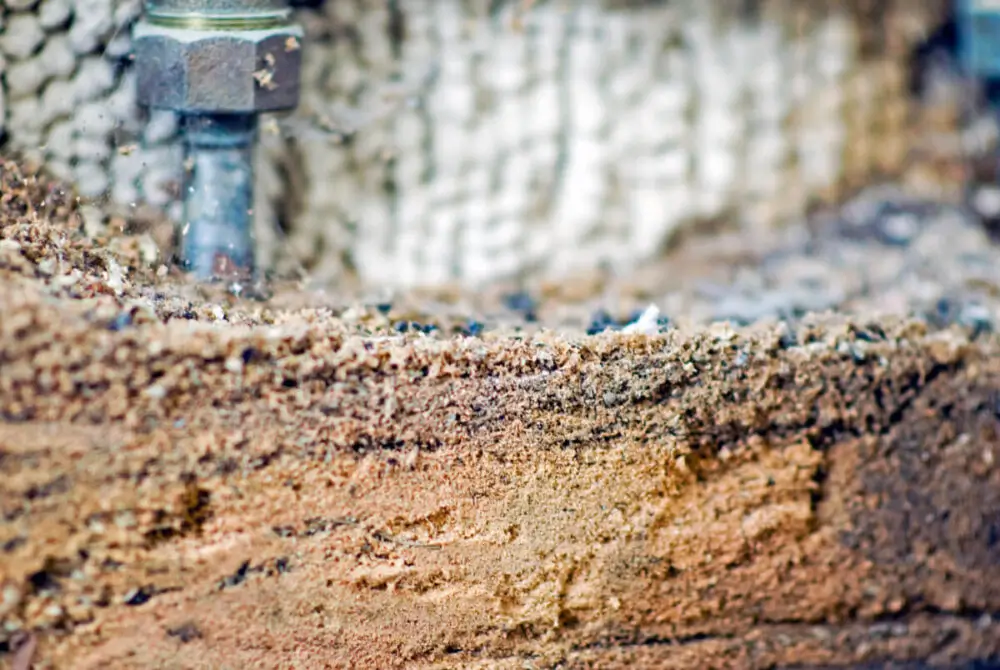
Carpenter ants are a separate and more serious concern, particularly in older duplexes where moisture has found its way into basement framing, sill plates, or subfloor structures over the years. A carpenter ant presence inside a building doesn’t mean the structure is about to fail — but it does mean there’s moist or damaged wood somewhere providing a nesting site, and that’s worth identifying. We distinguish between species during every inspection, because the treatment for pavement ants and the treatment for carpenter ants are genuinely different, and applying one approach to the other consistently produces results that don’t last.
For commercial properties in Saint-Léonard — particularly food service businesses and retail operations — ant activity isn’t just unpleasant, it’s a potential health inspection issue. We schedule commercial ant treatments around business hours and use food-safe application methods appropriate for the environment.
Year-Round Pest Management in Saint-Léonard
Because Saint-Léonard sees meaningful pest activity across both seasons — rodents in fall and winter, ants in spring and summer — the most cost-effective approach for many property owners here is a seasonal management program rather than reactive treatment every time something appears.
Spring (April–May): Perimeter ant inspection and treatment before colonies expand indoors. Foundation and exterior gap review after winter frost heave.
Fall (September–October): Rodent exclusion work before the October pressure surge. Foundation sealing, garage threshold checks, utility penetration review.
Ongoing: Commercial rodent monitoring with exterior bait station checks and activity tracking for food-adjacent businesses.
My Pest Exterminator offers programs structured around this calendar for residential and commercial clients in H1P, H1R, and H1S who prefer to manage pest pressure proactively rather than respond to it after it’s established.
Why Saint-Léonard Residents and Business Owners Call Us
The consistent thread in the calls we get from Saint-Léonard is that someone tried something on their own first — store-bought ant bait, snap traps from the hardware store — and the problem came back. Usually because the visible pest was treated but the source wasn’t. We show up, inspect properly, explain what we actually found, and fix the problem at the point it’s entering the property rather than just at the point where it’s visible.
Our technicians are experienced with the duplex building type, with commercial food service environments, and with the east Montreal rodent patterns that move through this part of the island seasonally. We use products that meet Canadian safety standards, appropriate for occupied residential and commercial spaces. And we’re straightforward about what treatment is needed and what isn’t — no padding a job with services that don’t serve the actual problem.
Serving H1P, H1R, H1S and the Surrounding East Montreal Area
Beyond Saint-Léonard itself, My Pest Exterminator regularly covers Anjou, Saint-Michel, Montréal-Nord, Rosemont–La Petite-Patrie, and Rivière-des-Prairies–Pointe-aux-Trembles. Working across the east end of the island keeps us current on what’s active in the area and what’s seasonal — information that shapes the timing and focus of every job we take in this corridor.
Saint-Léonard runs on a pest calendar that splits cleanly between the warmer months — when ants are the primary concern — and the colder ones — when mice and rats push indoors from outside. Managing both effectively means staying ahead of each seasonal window rather than reacting after activity is already established inside a building. If you’re a homeowner, landlord, or business operator in H1P, H1R, or H1S dealing with any of these problems, reach out to the team at mypestexterminator.com and we’ll arrange an inspection. We know this neighbourhood’s pest patterns well, and we’re set up to handle all three.

Residential Pest Control across the Saint-leonard-montreal
Call My Pest Exterminator today for fast, reliable, and affordable rodent control in Montreal.
Frequently Asked Questions About Pest Control in Saint-Léonard, Montreal
Duplexes are particularly accessible for mice because of shared basement spaces, utility penetrations between units, and foundation gaps that develop as the building settles over time. If mice are returning each year, the entry point hasn’t been properly sealed — trapping without exclusion work addresses what’s already inside but leaves the same access open for the next cycle.
Rats typically establish outdoors first — near dumpsters, under loading dock areas, in undisturbed ground beside commercial buildings — before pushing indoors as seasons change. Loading dock door gaps, utility penetrations at grade level, and unsecured waste storage are the most common access points for commercial properties in Saint-Léonard’s busier strips.
Pavement ants are the most frequently reported, nesting in soil along foundation walls and entering through cracks at grade level. Carpenter ants appear less often but are the more serious concern, nesting in moisture-damaged wood inside the building structure. We identify the species during every inspection because they require different treatment approaches.
Yes. My Pest Exterminator works with property owners and landlords throughout Saint-Léonard on both reactive pest treatment and preventive inspections ahead of seasonal activity periods. We provide written documentation of every inspection and treatment carried out, which landlords can use for tenant-related records.
Cost depends on the pest type, the size and type of property, and the severity of the infestation. An ant treatment for a single duplex unit is different in scope from a rodent exclusion program across a full building or a commercial rat control program. An on-site inspection gives the most accurate estimate.
April and early May, before ant colonies expand and push indoors in significant numbers. Early-season perimeter treatment addresses colonies while they’re still building, which requires less product and produces faster visible results than treating a well-established colony mid-summer.
Yes. Commercial food waste generates outdoor rat colonies that expand through the summer. When seasonal conditions change in fall, those colonies push outward into the nearest residential areas. Properties in proximity to high-turnover food retail or restaurant clusters on Saint-Léonard’s main commercial strips see this pattern regularly.
Yes. My Pest Exterminator works with restaurants, food retail, and commercial kitchen operators throughout H1P, H1R, and H1S using food-safe application methods, tamper-resistant exterior stations, and documentation appropriate for health inspection compliance.
Yes — we regularly cover Fabreville, Vimont, Auteuil, and Rosemère, as well as other Laval communities sharing similar riverside and residential pest dynamics with Sainte-Rose. We also serve the broader Greater Montreal region through our network of local service areas.
Over-the-counter treatments almost always address the trail rather than the colony. Eliminating visible ants without treating the outdoor colony — which may be several metres from where the ants are entering — pushes activity to a different access point without resolving the source. Locating and treating the colony is the step that makes the result hold.
Yes — we regularly cover Anjou, Saint-Michel, Montréal-Nord, Rosemont–La Petite-Patrie, and Rivière-des-Prairies–Pointe-aux-Trembles, as well as other east Montreal communities adjacent to Saint-Léonard.